The surprising thing about a good pipeline is that it is already halfway to a good tutorial.
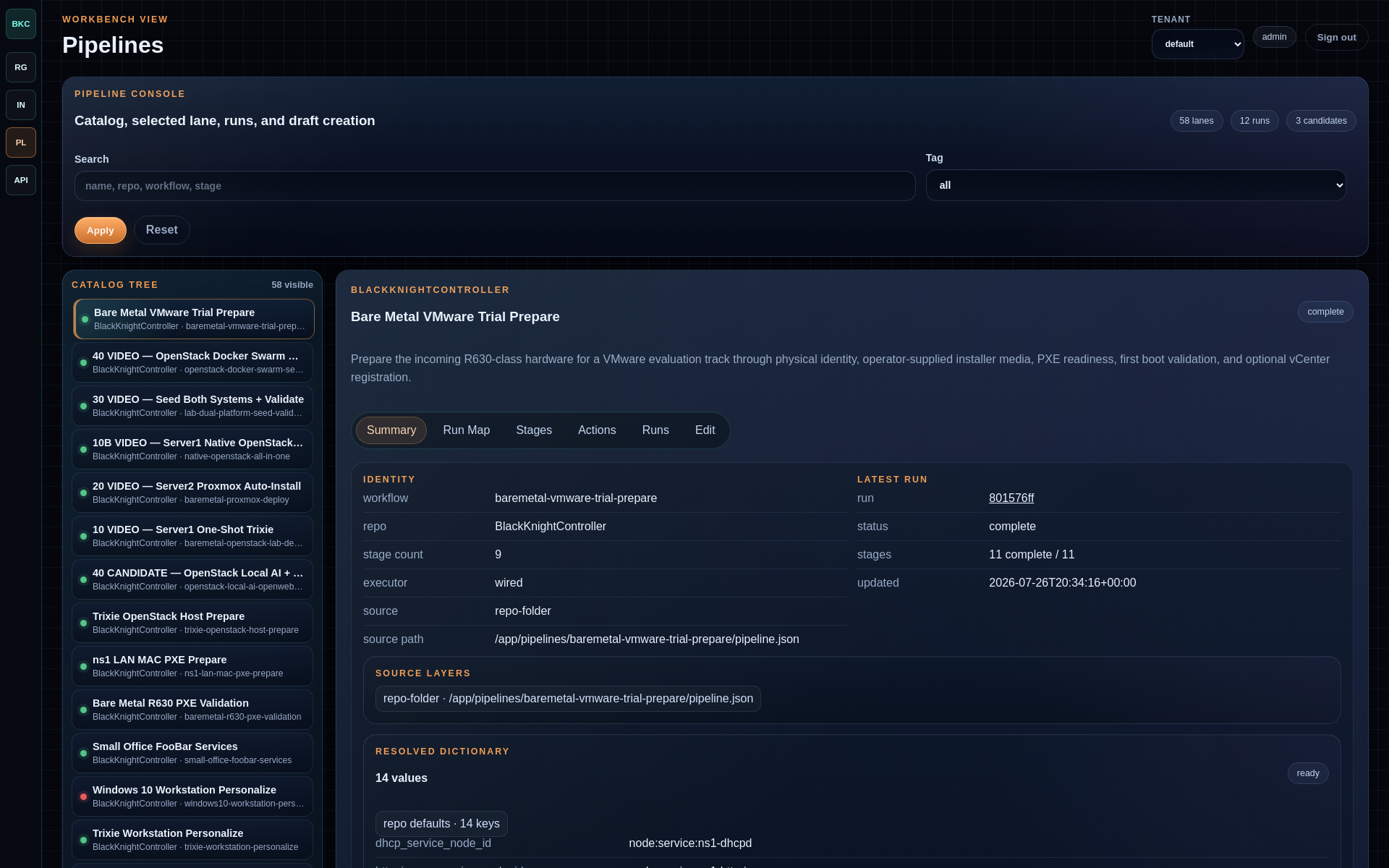
A mature BlackKnightController pipeline contains the pieces an engineer needs to learn from the work:
- goal and target;
- required inputs;
- prerequisites;
- ordered stages;
- transport choices;
- risk boundaries;
- validation checks;
- known-good fragments;
- evidence from real runs.
That is why BKC pipelines should not stay hidden inside the tool. The validated ones can become public teaching material.
The publishing pattern
The pipeline remains the native operating artifact. The public article tells the story. The GitHub repo carries the complete runnable example.
BKC pipeline
  -> public article
  -> GitHub tutorial kit
  -> manual shell walkthrough
  -> Ansible companion
  -> Puppet/OpenVox companion
  -> diagrams and screenshots
That lets different readers enter at different levels.
Someone learning Linux can start with the manual shell version. A traditional operations team can start with Ansible. A configuration-management shop can look at the Puppet/OpenVox companion. BKC remains the full fabric version that ties hardware, services, evidence, and validation together.
Example: bare-metal provisioning
A PXE pipeline naturally becomes a tutorial:
1. The problem
2. The old manual way
3. The BKC pipeline way
4. DHCP/TFTP/HTTP pieces
5. Installer answer file
6. Disk/bootloader caveats
7. Validation evidence
8. Full repo example
The article should show the important excerpt, not a giant wall of preseed or shell. The repo should carry the full files.
Companion repo shape
README.md
docs/
  overview.md
  troubleshooting.md
  screenshots/
manual/
  00-prereqs.md
  10-install.md
  20-validate.md
ansible/
  inventory.example.yml
  playbook.yml
  roles/
puppet/
  manifests/
  modules/
bkc/
  pipeline.json
  defaults.json
  fragments.json
examples/
  .env.example
  dhcpd.example.conf
  nginx.example.conf
The goal is not to bury people in files. The goal is to show that the public guide is backed by something real.
Why this matters
Many automation articles describe what a person could do. Auzietek should focus on what was actually done, validated, and converted into repeatable form.
That posture matters:
- no vaporware;
- no stock screenshots pretending to be infrastructure;
- no magic step hidden in a chat transcript;
- every tutorial can point back to a runnable artifact or known-good fragment.
This is how Auzietek expands from a product site into a mentoring ecosystem:
- BKC for full-stack operational control;
- GitHub kits for hands-on learners;
- articles for context and judgment;
- issues for confirmed fixes and improvements;
- fragments for the truth we do not want to rediscover.
The machine becomes useful. The lesson becomes shareable.